How Our Logo En...
How Our Logo Ended Up On A Wedding Suit And In Daily Mail

Janu Lingeswaran
Updated
Company news
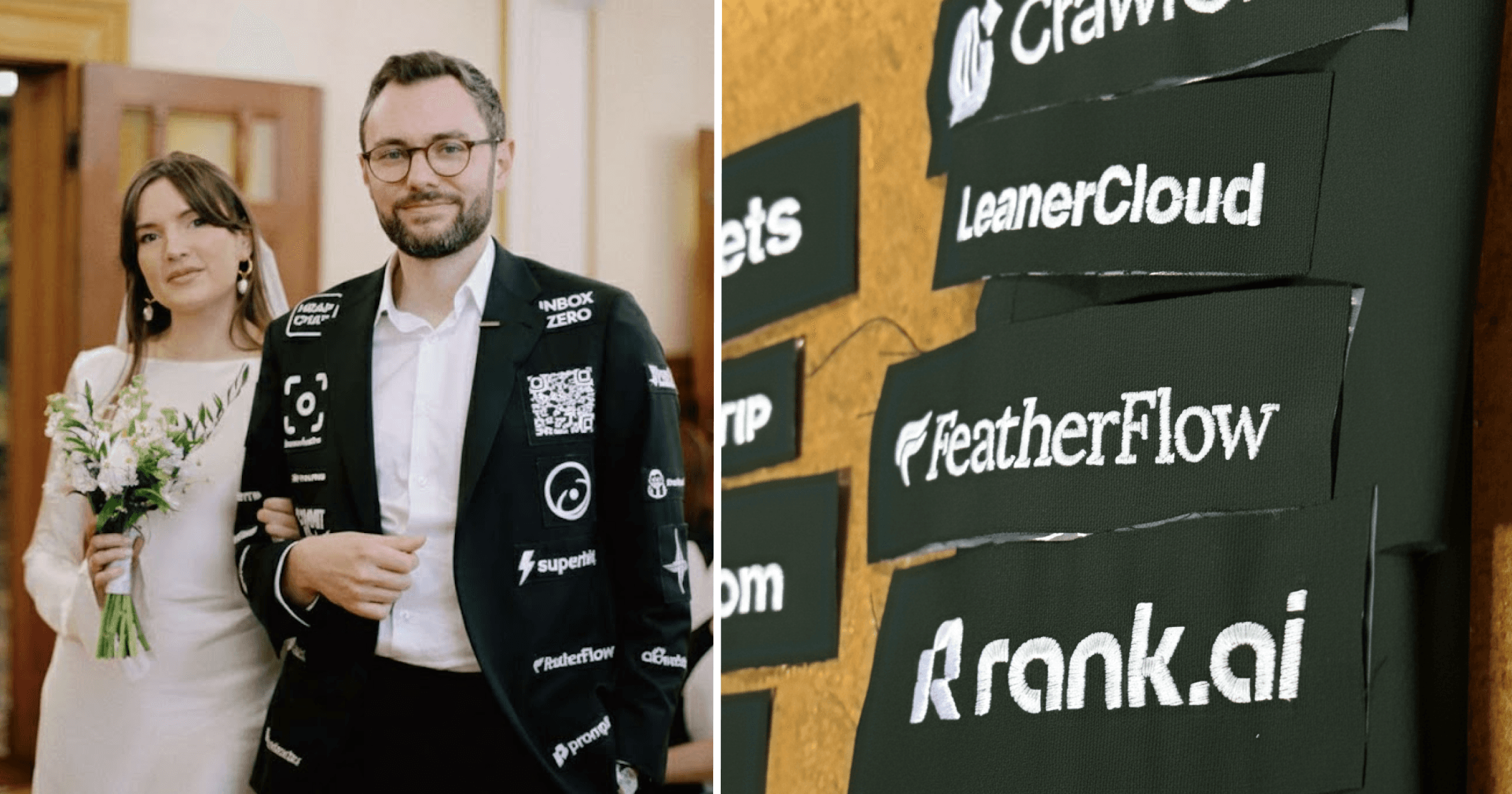
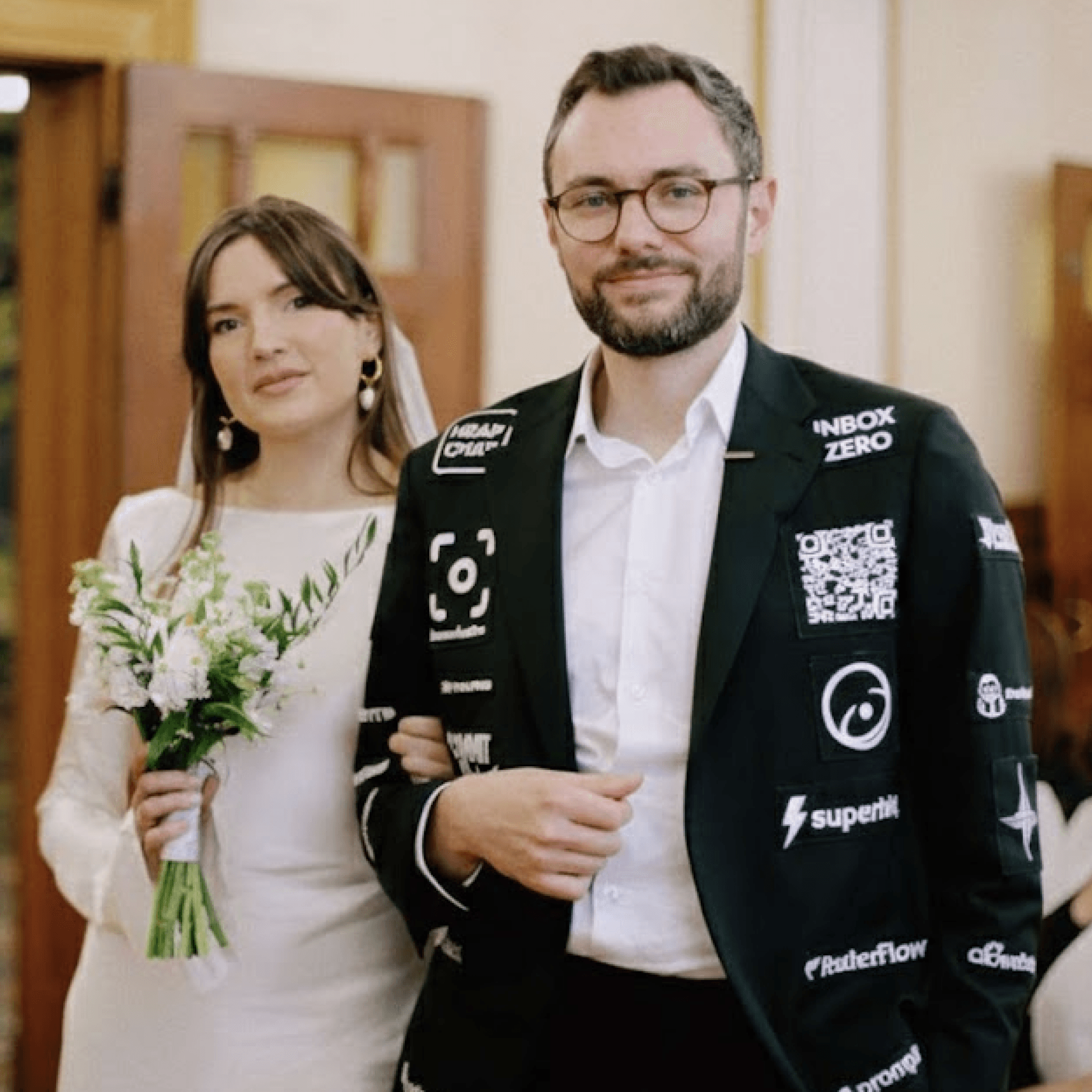
I did not plan this.
I did not sit down and think, "How can FeatherFlow get into Daily Mail and Business Insider this year?"
I just saw a founder I followed on X who was broke, stressed about his wedding, and trying something very crazy/funny to fix it.
And I said yes.
This is the story of how our logo ended up on a wedding suit, went viral, and how that fits how I see entrepreneurship and product building.
The setup: a founder, a wedding, and no money
Dagobert Renouf is a founder from France I had been following on X for a while.
He had been bootstrapping for years. No funding. No big salary. Just the usual founder roller coaster.
In 2025 his solo startup was not going well. Money was tight. At the same time, he and his partner wanted to get married faster because of visa reasons.
So he had two things at once:
A dream to keep building his startup
A dream to give his partner a real wedding
And almost no money to do it.
He posted about that on social media.
Someone in his community joked:
"If you really need money, put my logo on your wedding suit."
Most people would laugh and move on.
Dagobert did the opposite.
He said: "Ok. Let's do it."
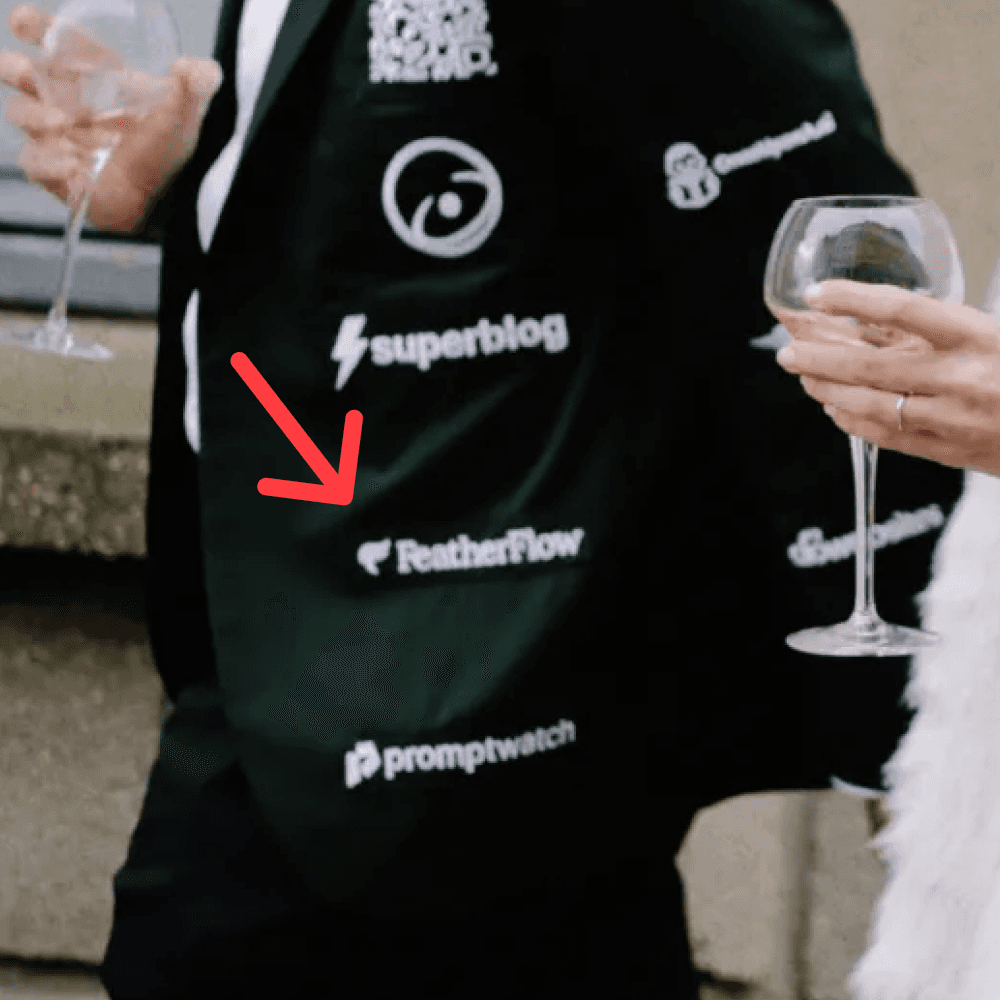
Selling ad spots on a wedding suit
Dagobert decided to sell sponsorship spots on his wedding suit.
He shared the idea on X and inside founder communities.
Very quickly people started to reply with:
"I want my logo on the suit."
"Count me in."
"This is crazy but I love it."
He set some rules for himself:
Only founders and companies he actually liked
No big faceless brands
Mostly indie founders and people from his journey
In the end he sold 26 spots for around $11,500 in total.
Prices ranged from a few hundred dollars to a couple of thousand, depending on placement and visibility.
He also decided that the suit itself should look good. Not cheap. Not like a costume.
So he worked with a stylist and used high quality embroidery. The final suit looked special and bold, but still elegant.
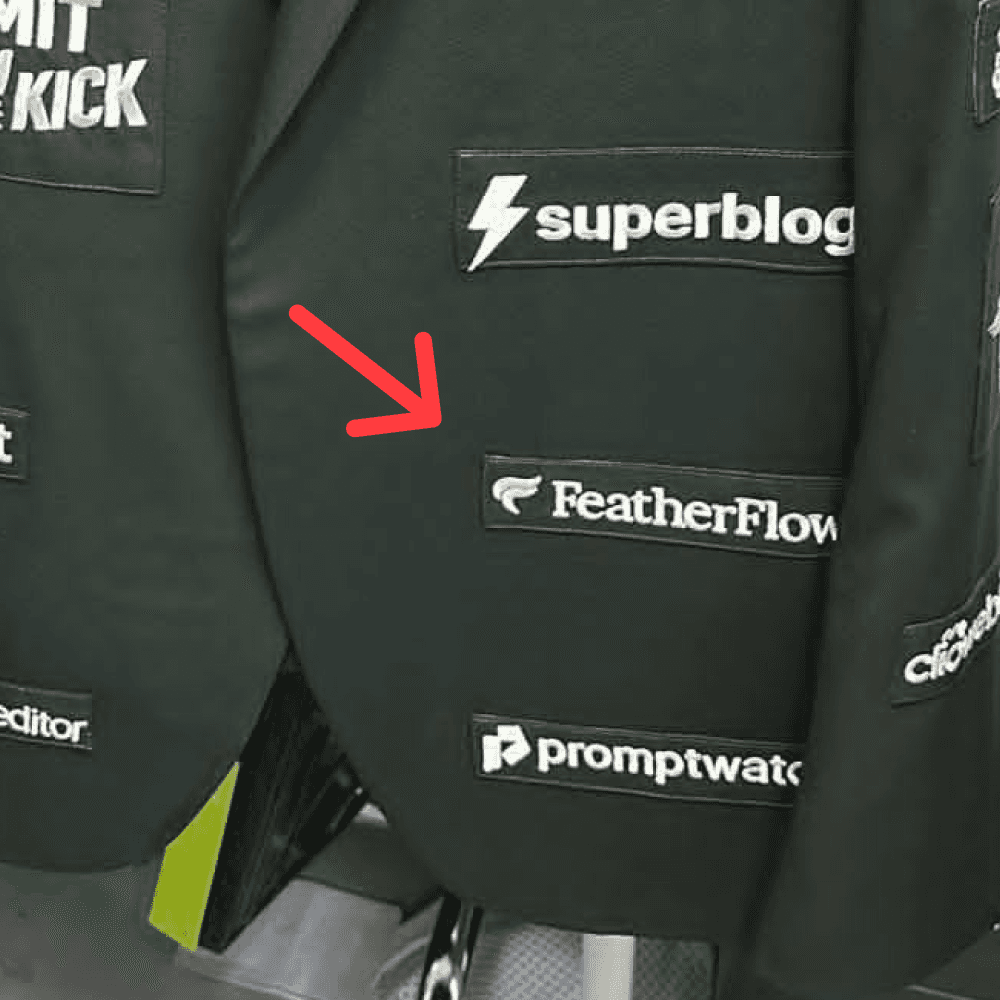
Why FeatherFlow sponsored the suit
I run FeatherFlow, a product development studio that builds software products for companies, especially AI products.
When I saw Dagobert post about the suit, I did not think "smart ad inventory."
I saw:
A founder who refused to give up
A creative way to solve a painful problem
A story that was honest and very human
So I decided to sponsor.
Not because I expected a crazy ROI from that one logo.
Not because there was any guarantee of media coverage.
I did it because this is exactly the type of energy I believe in:
Original ideas. Public bets. Stupid and funny!
People who ship even when things look bad from the outside.
It felt right that FeatherFlow should be on that suit.
Then it exploded: Daily Mail, Business Insider, huge accounts
What happened next was wild.
The story started to spread online. People shared photos and videos from the wedding. The suit was impossible to ignore.
Then it jumped into mainstream media.
The story appeared in:
Daily Mail, with a feature about a "completely broke man on the brink of homelessness" who found a way to pay for his wedding
Business Insider, in an "as told to" piece where Dagobert shared the whole journey
people.com, with an exclusive article
Multiple big Instagram accounts and other media pages
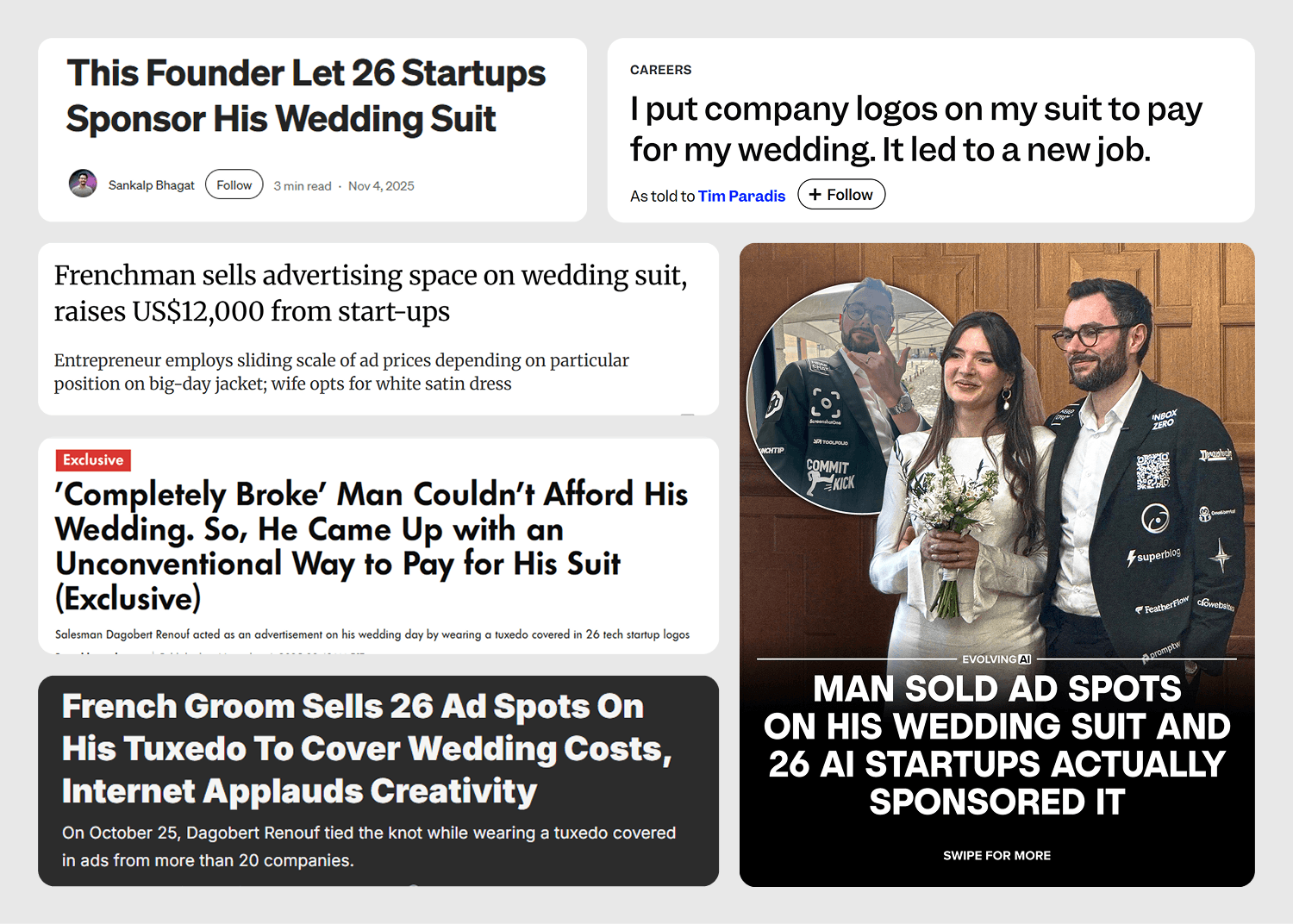
Suddenly, this very weird experiment was global.
Our logo was now:
On a wedding suit
In international media
In front of millions of people
All because one founder said yes to a crazy idea.
And other founders, including me, decided to back it.
The best part: it changed his life
The most beautiful part of this story is not the clicks.
It is what happened after.
One of the people who saw the story was the cofounder of Comp AI.
He had been following the suit idea for months. He watched how Dagobert sold the spots, how he marketed it, how he pushed through hate and jokes and still delivered for the sponsors.
He did not just see a stunt.
He saw proof that Dagobert could sell.
That led to a real offer.
Today, Dagobert works in tech sales at Comp AI, with a solid base salary plus commissions.
The suit did more than pay for a wedding.
It created a new career path.
That is the kind of plot twist I love.
What this revealed to me about brand and story
For me, this whole thing confirmed a few beliefs I already had.
1. The best brand moments are not planned in a deck
We did not design a campaign.
We did not hire a PR agency.
We backed a real human story.
That is hard to "scale" in a spreadsheet, but it sticks in people’s minds.
2. Original ideas still cut through
You can buy impressions.
You cannot buy this kind of emotional reaction.
A founder selling ad spots on his wedding suit is so specific and so real that people want to talk about it.
3. Communities can outperform ad budgets
This whole thing came from founder communities and social media.
No media plan.
No huge budget.
Just a group of people who support each other, both in business and in life.
4. Visibility is strongest when it is earned, not forced
Our logo showed up in massive outlets, but it did not feel like an ad.
It felt like a small part of a bigger story.
That is how I want FeatherFlow to appear in the world.
How this connects to FeatherFlow
FeatherFlow builds products, mostly for companies that want to launch or scale software products fast.
We work on:
Product strategy
UX and UI
Development, especially AI products
But under all that, there is something deeper that attracts me to certain projects and people.
I like founders and teams who:
Take unusual routes
Share honestly when they are struggling
Are willing to look a bit "crazy" to make something work
This suit project was not a "campaign" for us.
It was us putting our logo next to a mindset we strongly believe in.
If you strip the story down, it is simple:
A founder was in trouble.
He tried something bold.
His community helped.
It went viral.
His life changed.
And our brand was there too, not as the hero, but as one of the people who believed in him early.
I am proud of that.
The takeaway for other founders
If you are building something right now and it feels risky, strange, or a bit embarrassing, this is what I would say:
You cannot always out-compete with money.
You can often out-compete with courage and creativity.
If people call your idea crazy, you might be onto something.
Some of the best outcomes are not linear.
A sponsored wedding suit can turn into global press.
Global press can turn into a new job.
A desperate idea can turn into a new chapter.
And sometimes, saying "yes" to a weird idea is the best brand decision you never planned.