20 AI Concepts...
20 AI Concepts to Know in 2026
AI is everywhere, but the mechanics behind it can still feel unclear.
Words like transformers, embeddings, RAG, and agents often appear in meetings and LinkedIn posts as if they need no explanation. This article unpacks the mental models behind them so the technology is easier to evaluate and use.
The following 20 concepts explain the building blocks behind the AI tools people use today.

Aamir Khan
Updated
Educational
Part 1: How AI Actually Works
1. Neural Networks
Neural networks underpin most modern AI models.
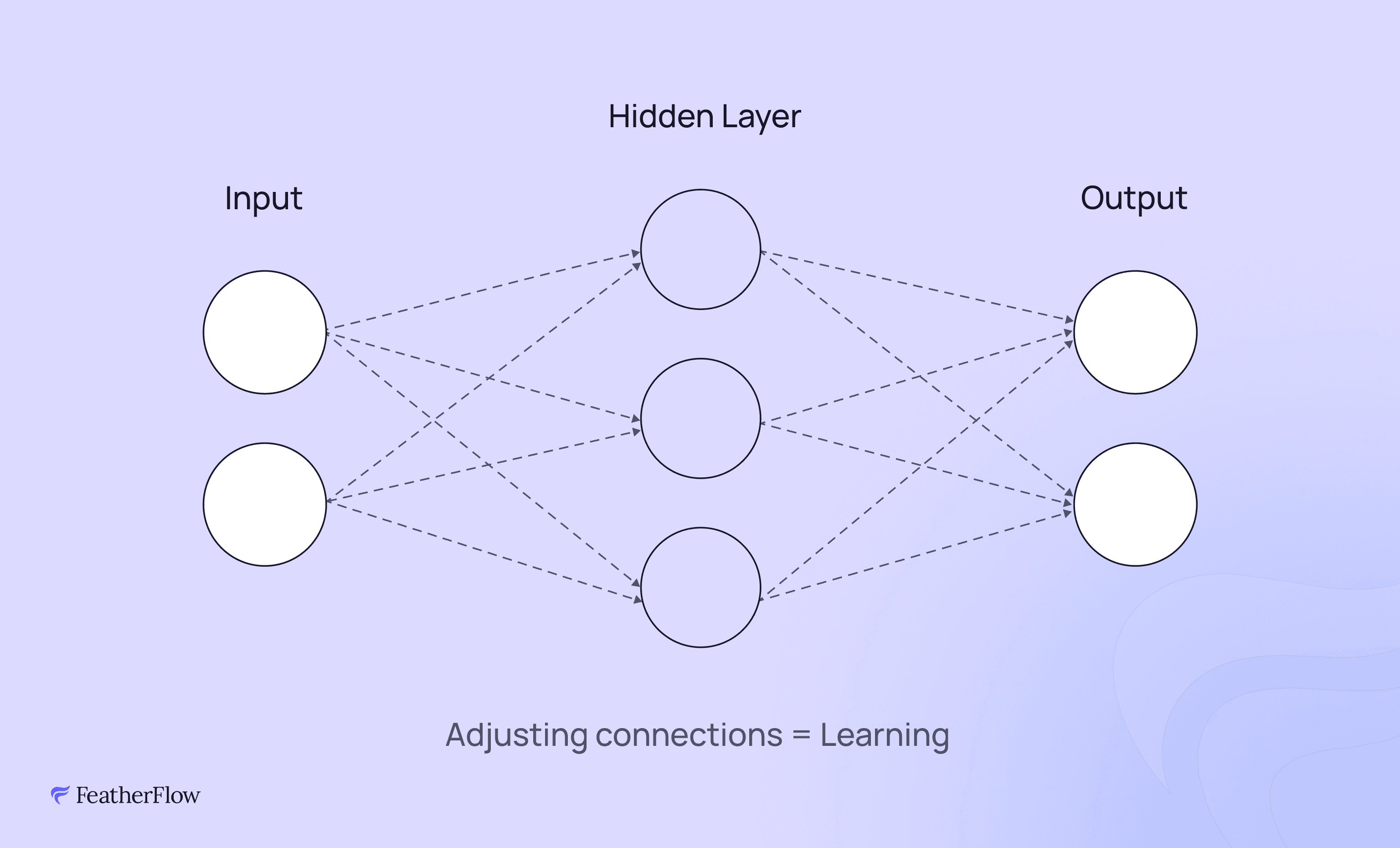
A neural network is a series of layers. Data enters at the input layer, passes through hidden layers where it gets processed, and exits as a prediction or output. Every connection between layers has a “weight,” a tiny value that controls how much influence one part has over the next.
Training adjusts billions of weights so a model’s outputs better match the examples it sees.
Frontier models can contain trillions of parameters, but the basic mechanism remains the same.
2. Tokenization
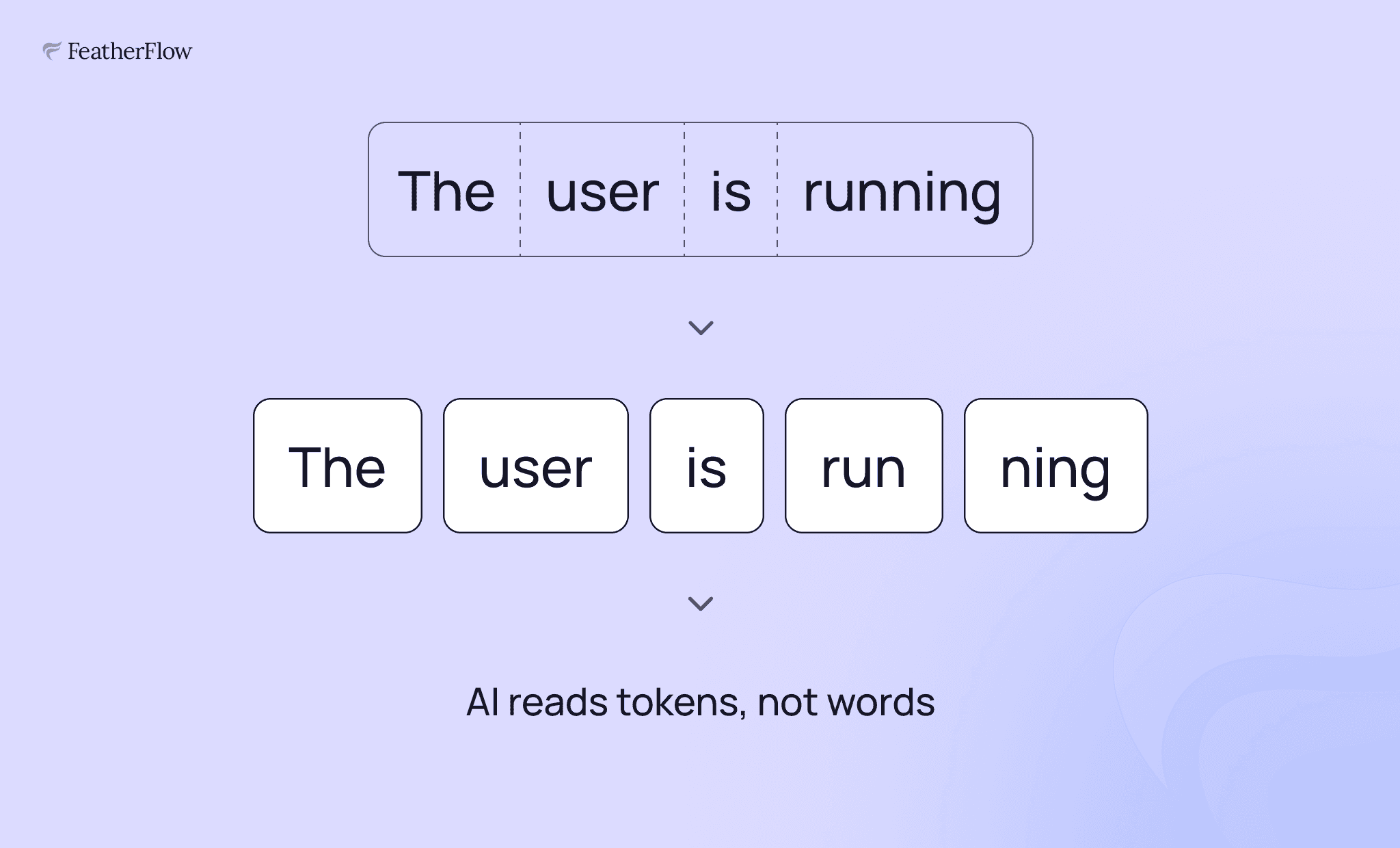
Before an AI can read your text, it breaks it into chunks called tokens.
Not always full words. “Playing” might become “play” and “ing.” “ChatGPT” might split into “Chat,” “G,” and “PT.” Some common words stay whole.
Language contains new words, typos, slang, and mixed languages, so a fixed dictionary would fail constantly. Reusable tokens give models a flexible way to represent that variation.
A rough rule of thumb is that one token equals about 0.75 words, so 1,000 tokens is roughly 750 words.
3. Embeddings
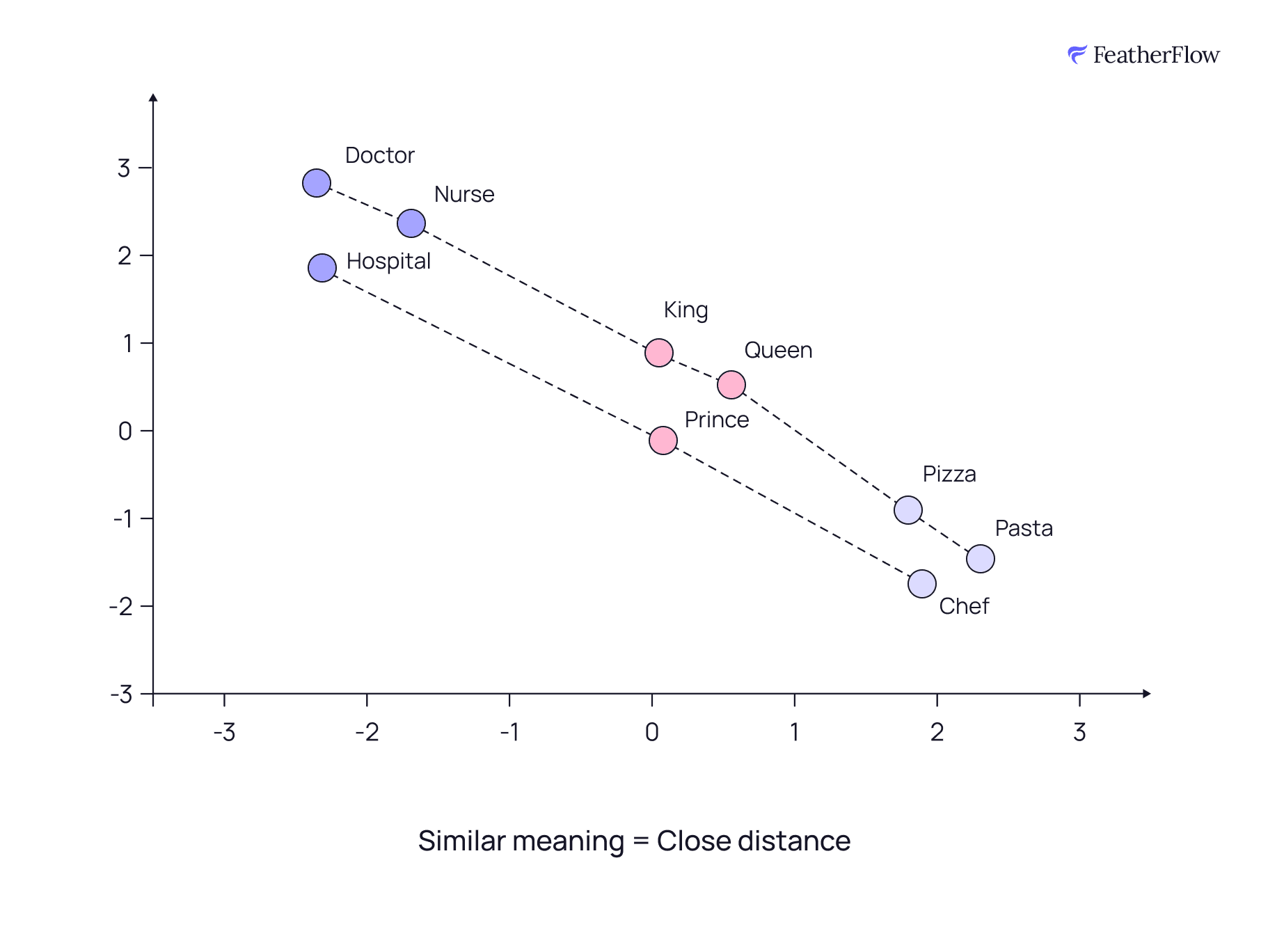
Once text is tokenized, each token gets converted into a number. Specifically, a vector (a list of numbers) that represents its meaning.
Embeddings place related concepts near one another in a numerical space: “doctor” and “nurse” tend to be closer than “doctor” and “pizza.” This geometry helps the model compare meaning rather than only match exact words.
The model doesn’t understand words the way you do. It understands relationships, distances, and directions in this numerical space.
Embeddings are what power semantic search, recommendation engines, and RAG systems.
4. Attention
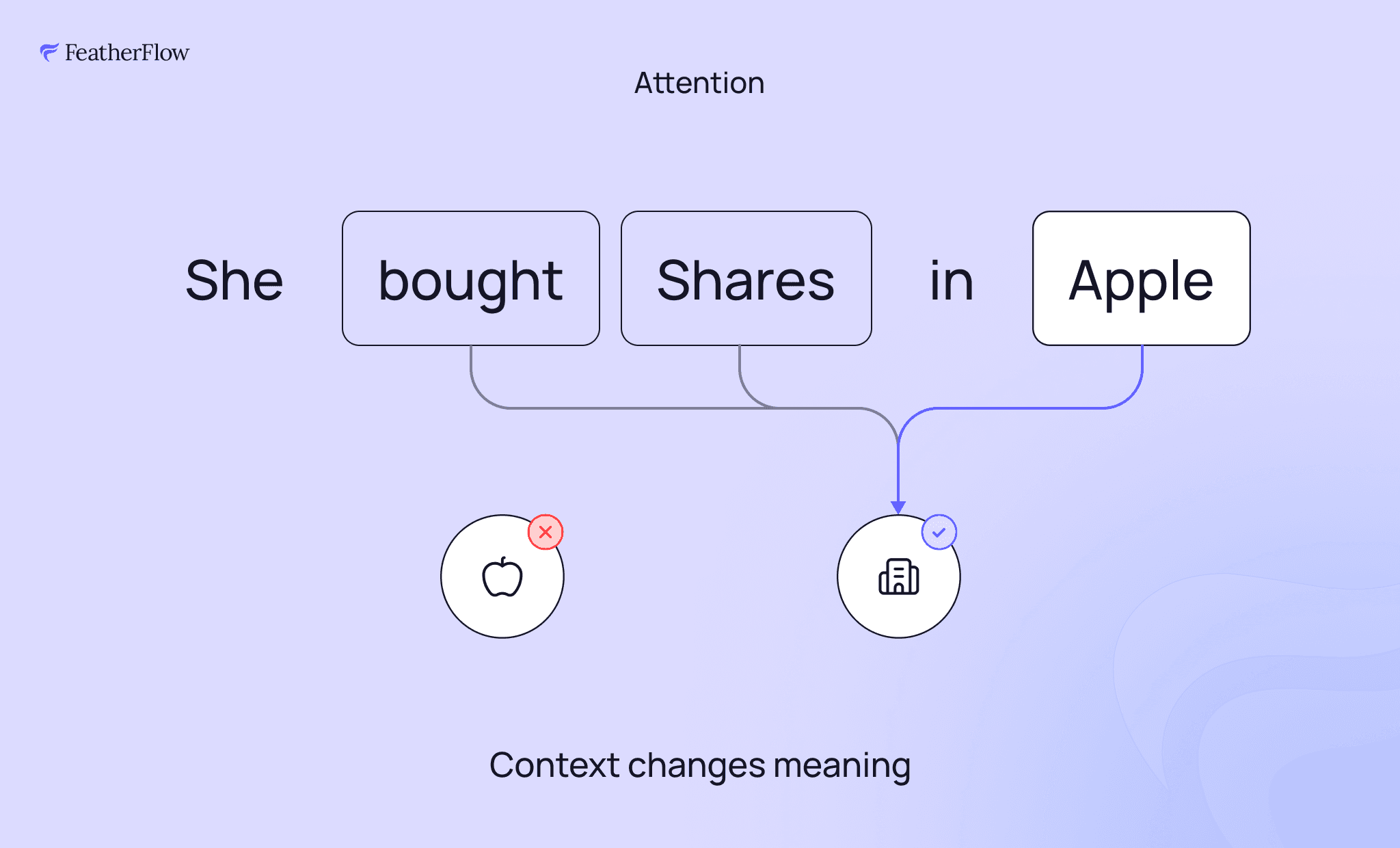
Embeddings alone cannot resolve ambiguous words. In “I ate an Apple” and “I bought Apple stock,” the same token refers to different things.
Attention fixes this. It lets every word look at every other word in a sentence and decide what matters most in context.
In “She bought shares in Apple,” the model learns to pay high attention to “shares” and “bought” when interpreting “Apple” and concludes it’s the company, not the fruit.
Attention lets models compare tokens across a sequence, which made parallel training practical and enabled much larger language models.
5. Transformers
Transformers are the architecture behind most leading AI models.
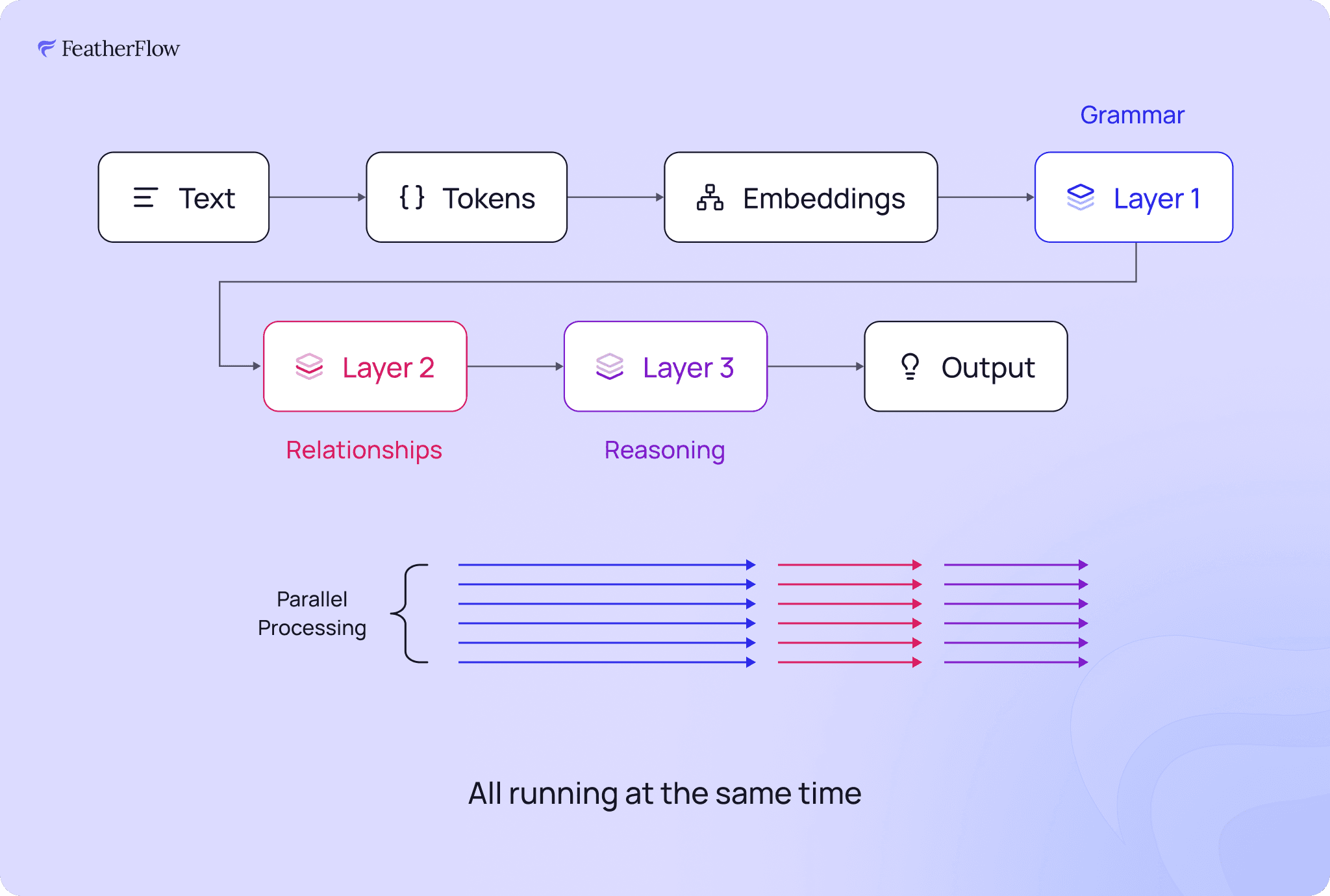
The 2017 paper “Attention Is All You Need” introduced transformers, which use attention to process sequences in parallel rather than one word at a time. That made it feasible to train models at much larger scales.
The pipeline looks like this: Text → Tokens → Embeddings → Stacked attention layers → Output.
Each layer builds on the last. Early layers pick up grammar. Middle layers handle word relationships. Later layers capture high-level meaning.
GPT, Claude, Gemini, Llama, and Mistral all use transformer-based architectures.
Part 2: How LLMs Work
6. LLMs (Large Language Models)
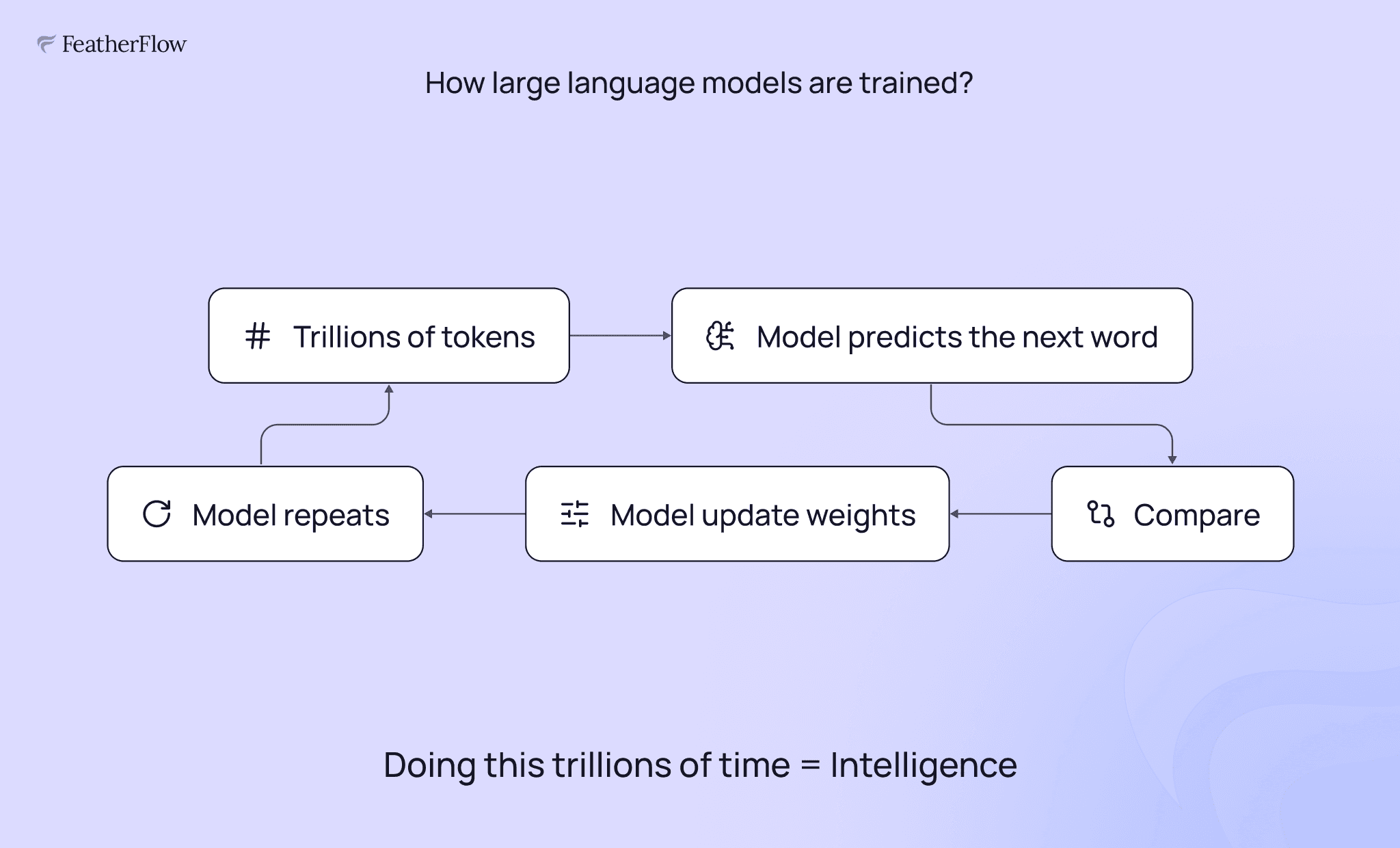
An LLM is a transformer trained on a massive amount of text: books, websites, Wikipedia, code, Reddit. Trillions of tokens.
The core training task is to predict the next token.
At scale, next-token prediction teaches models statistical patterns in grammar, code, translation, and many other forms of language. Those abilities emerge from the training objective rather than from separate hand-written rules.
ChatGPT, Claude, and Gemini are products built on top of LLMs.
7. Context Window
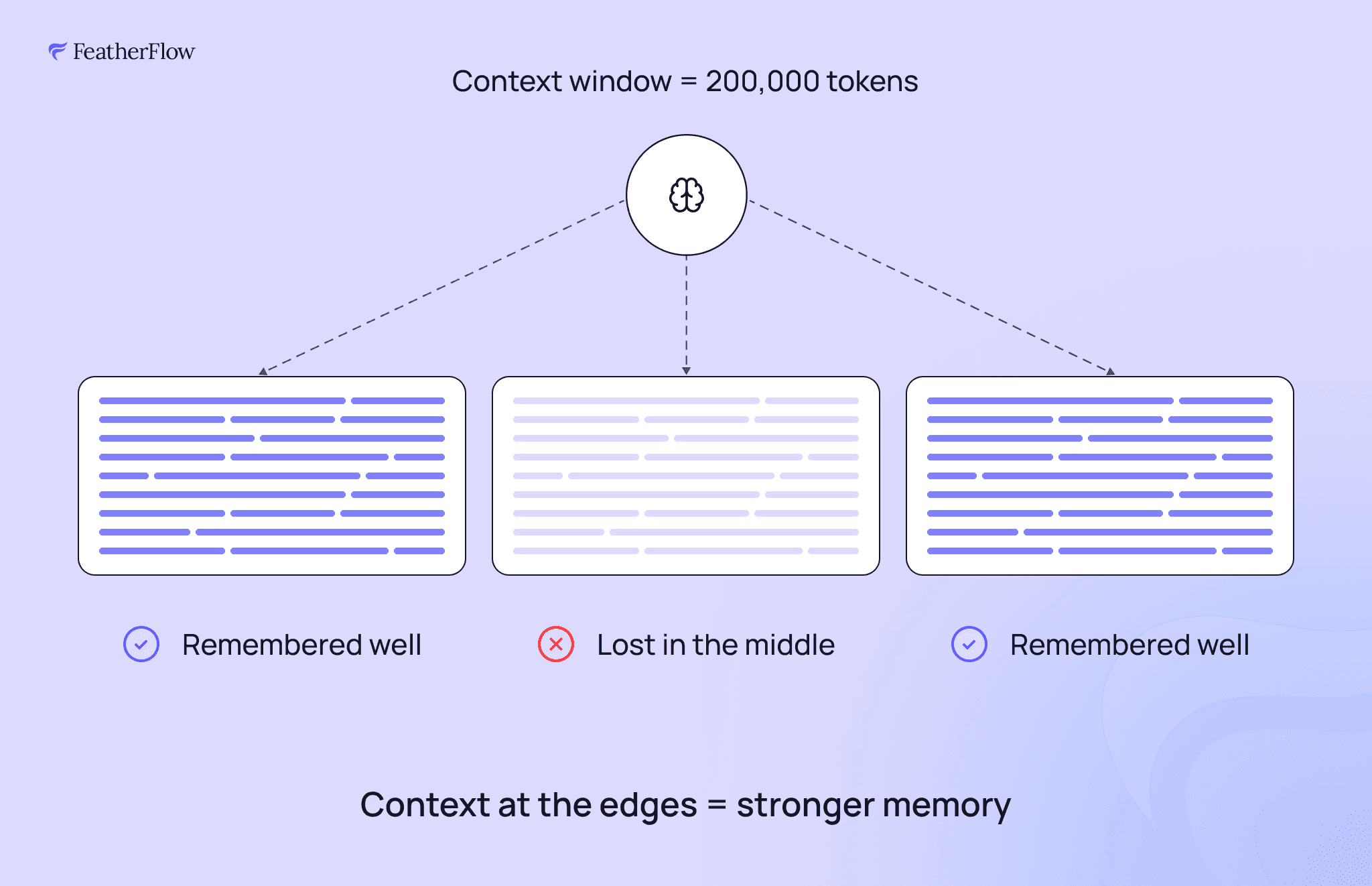
Every AI model has a memory limit called the context window. It’s the maximum number of tokens the model can “see” at once. Your message, its response, and the entire conversation history all count toward it.
Early GPT models topped out around 4,000–8,000 tokens. Today most frontier models sit at a million, including GPT-5.5, Gemini 3.1 Pro, and Claude’s 1M beta, and open-weight models like Llama 4 Scout advertise ten times that.
A larger context window does not guarantee equally strong use of every token. Models often prioritize information near the beginning and end of a long prompt, a limitation known as the “Lost in the Middle” problem.
A million-token window is capacity, not a guarantee of perfect recall across the whole input.
8. Temperature
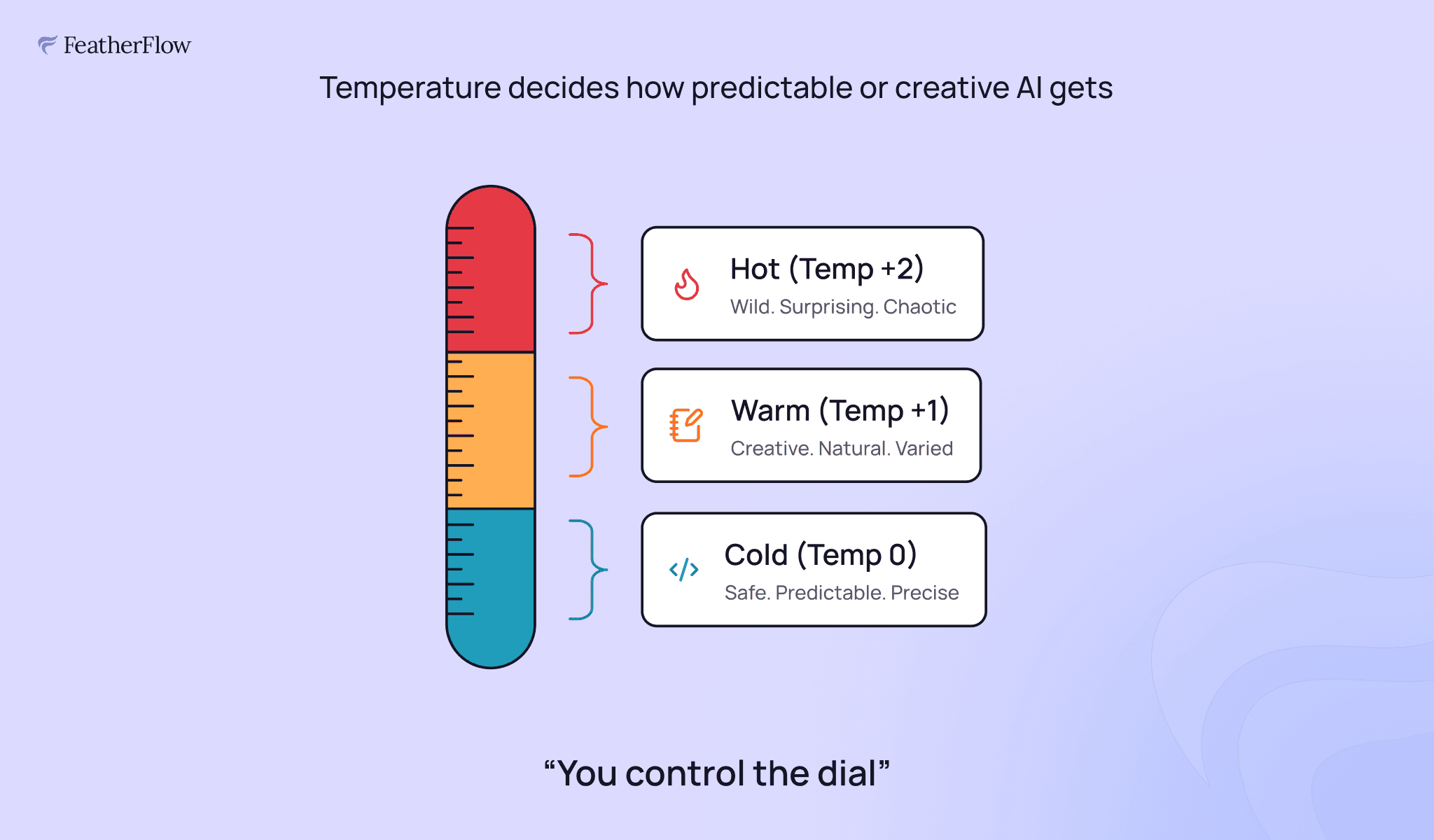
When AI generates text, it doesn’t always pick the single most likely next word. There’s a dial called temperature that controls this.
At temperature 0, it picks the safest, most predictable option every time. At higher temperatures, it takes more creative risks.
Low temperature: code, facts, summaries.
High temperature: brainstorming, creative writing, ideation.
Most tools set this automatically. But it explains why sometimes AI feels robotic and other times it surprises you.
9. Hallucination
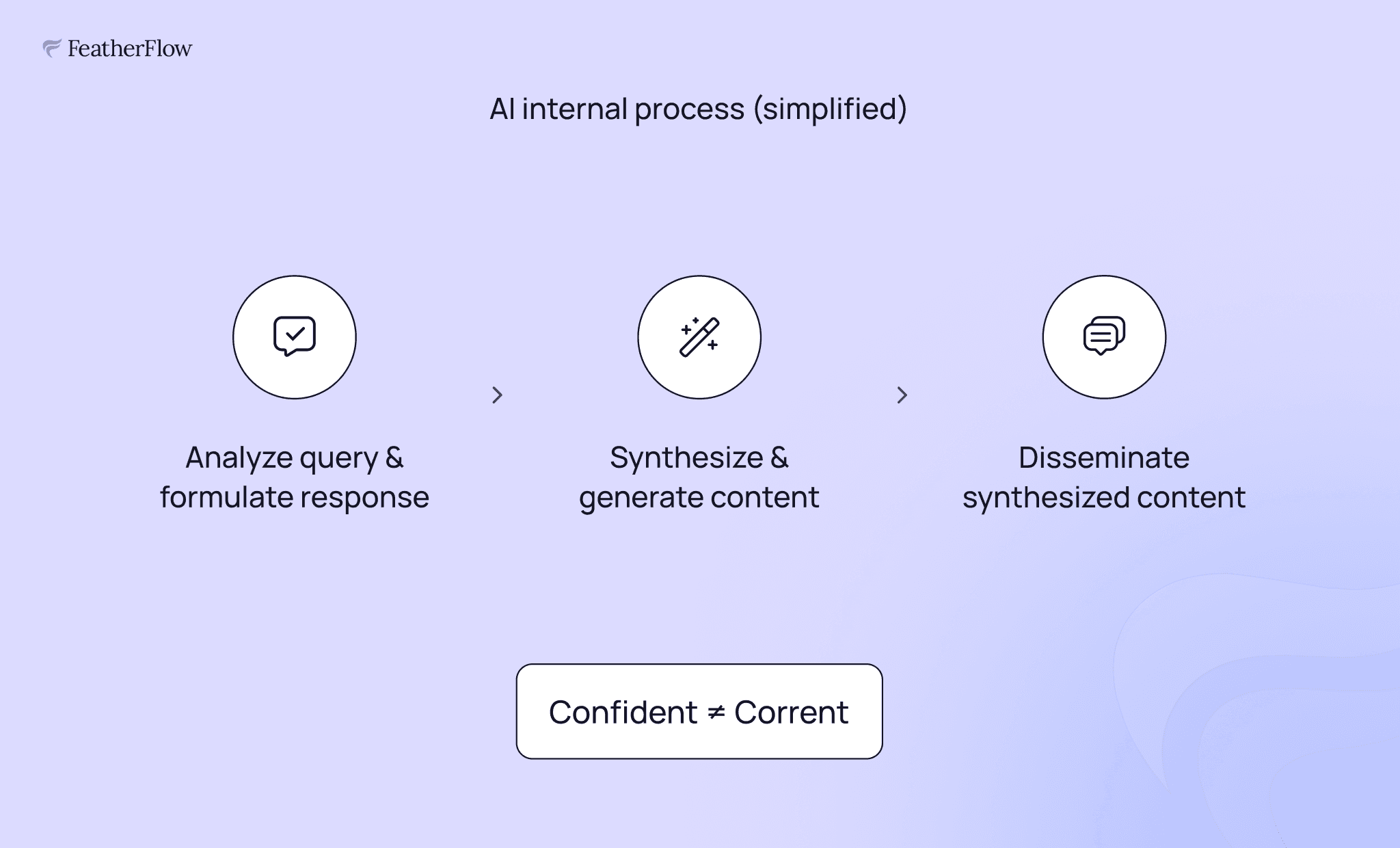
A hallucination is a plausible but incorrect output generated when a model lacks reliable grounding or verification.
LLMs predict likely next tokens rather than independently checking whether a claim is true. Without retrieval or verification, a statement that resembles a familiar pattern can still be false.
So it will confidently cite a paper that doesn’t exist, invent an API function that was never built, or get a historical date completely wrong.
That failure mode is called hallucination.
Verify factual claims before relying on them, and use retrieval-augmented generation to ground answers in current source material.
10. Prompt Engineering
Prompt quality affects the model’s output.
The same model can produce very different results when the task, context, audience, and desired format are specified differently.
Bad: “Explain APIs.”
Better: “Explain how REST APIs handle authentication. Give a real example with code. Assume I’m a junior dev who understands JavaScript.”
Prompt engineering is clear communication with a model: provide relevant context, define the task, specify the output format, and include examples when they help.
For most everyday work, those basics matter more than elaborate prompting formulas.
Part 3: How AI Models Improve
11. Transfer Learning
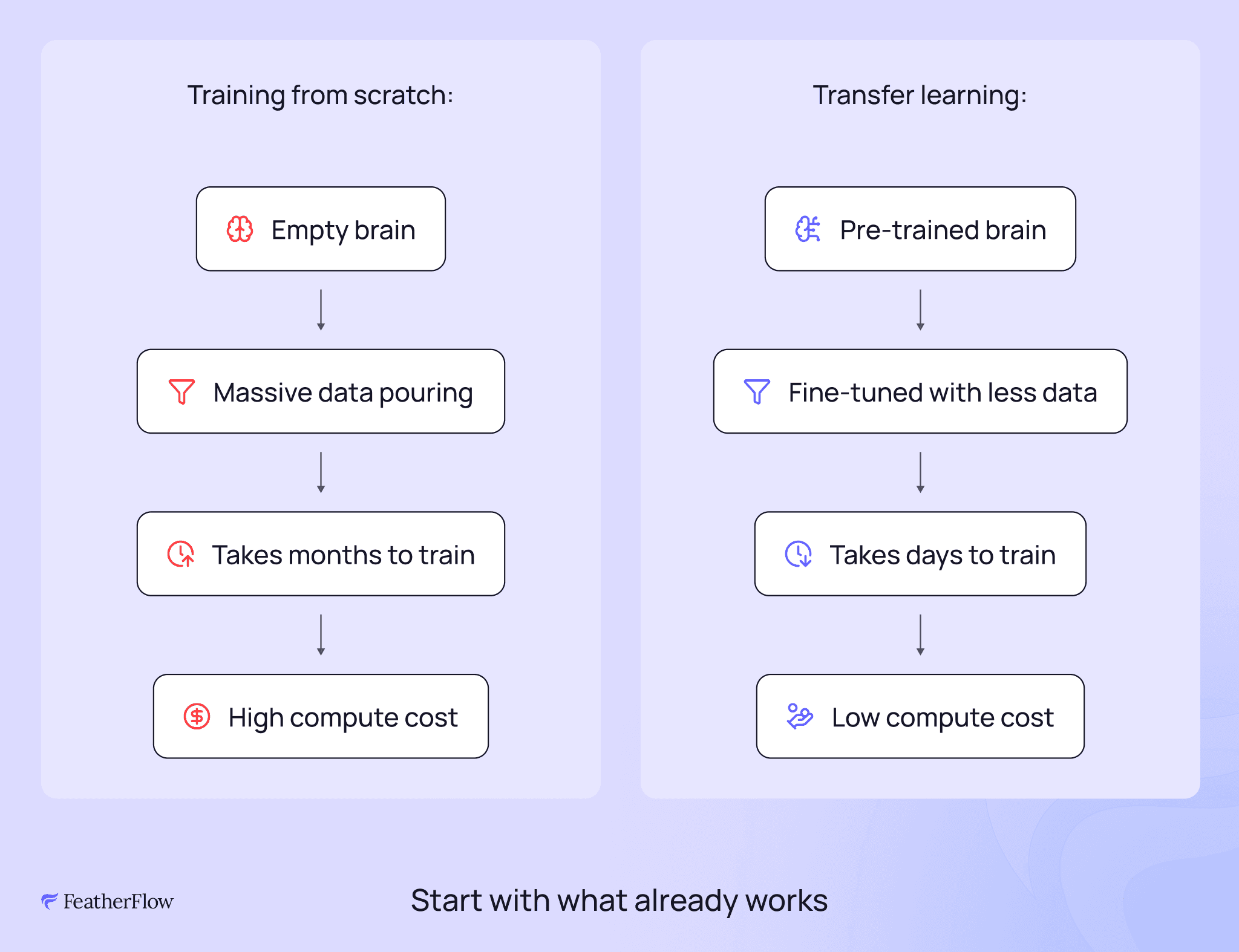
Training a model from scratch requires large datasets, extensive compute, and significant time.
Transfer learning starts with a model trained on a broad task and adapts it to a more specific one, preserving useful patterns learned during the original training.
A model that has already learned broad language patterns needs less data and compute to adapt to a focused domain.
Most teams begin with a foundation model rather than training one from scratch.
12. Fine-Tuning
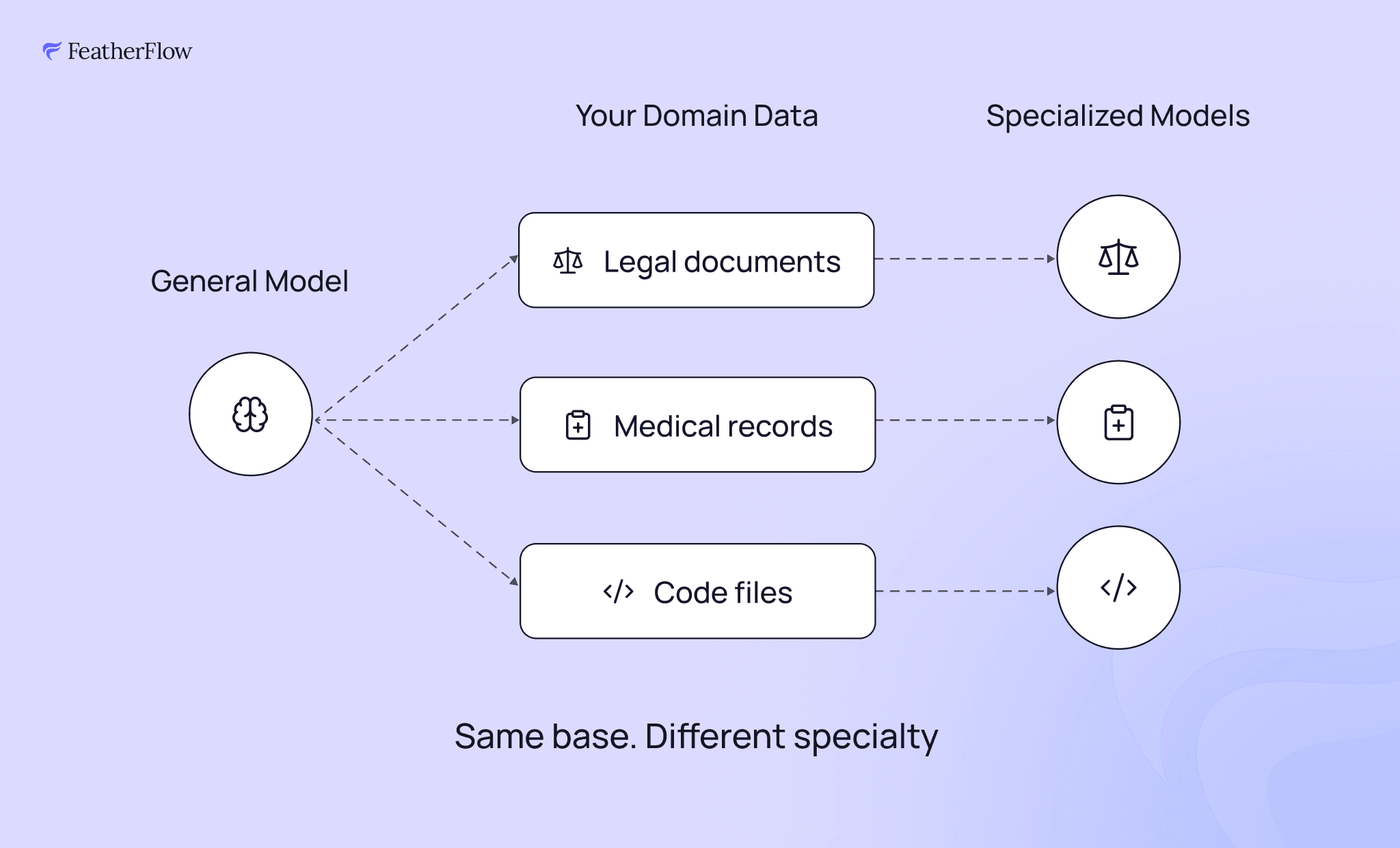
Fine-tuning is one way to apply transfer learning.
You take a pretrained model and continue training it on a smaller, more focused dataset. The model already speaks “language” and now you’re teaching it your specific domain. A medical model fine-tuned on clinical notes. A legal model fine-tuned on contracts. A customer service bot fine-tuned on your support tickets.
Fine-tuning can improve performance for a specific use case, but updating every parameter is computationally expensive.
13. RLHF (Reinforcement Learning from Human Feedback)
RLHF helps shape a model’s outputs around human preferences for usefulness, safety, and clarity.
A base language model predicts text fluently, but it is not automatically aligned with what people consider useful or safe.
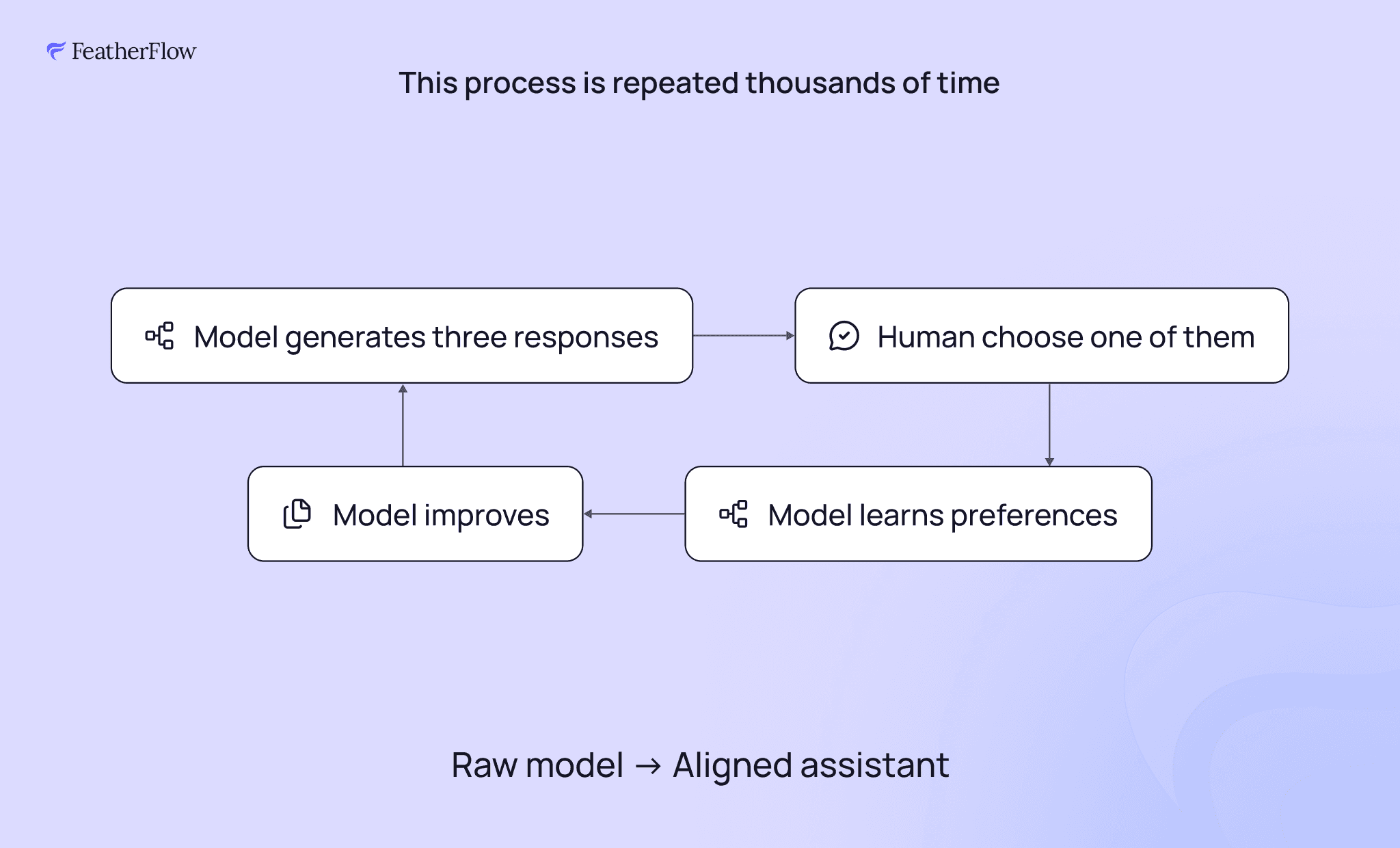
In a typical RLHF workflow, a model generates several responses, people rank them, and training uses those rankings as feedback.
Over many examples, the model learns which response patterns people tend to prefer: clear, helpful, honest, and safe.
This training stage helps products such as ChatGPT and Claude behave more like assistants than raw text generators.
14. LoRA (Low-Rank Adaptation)
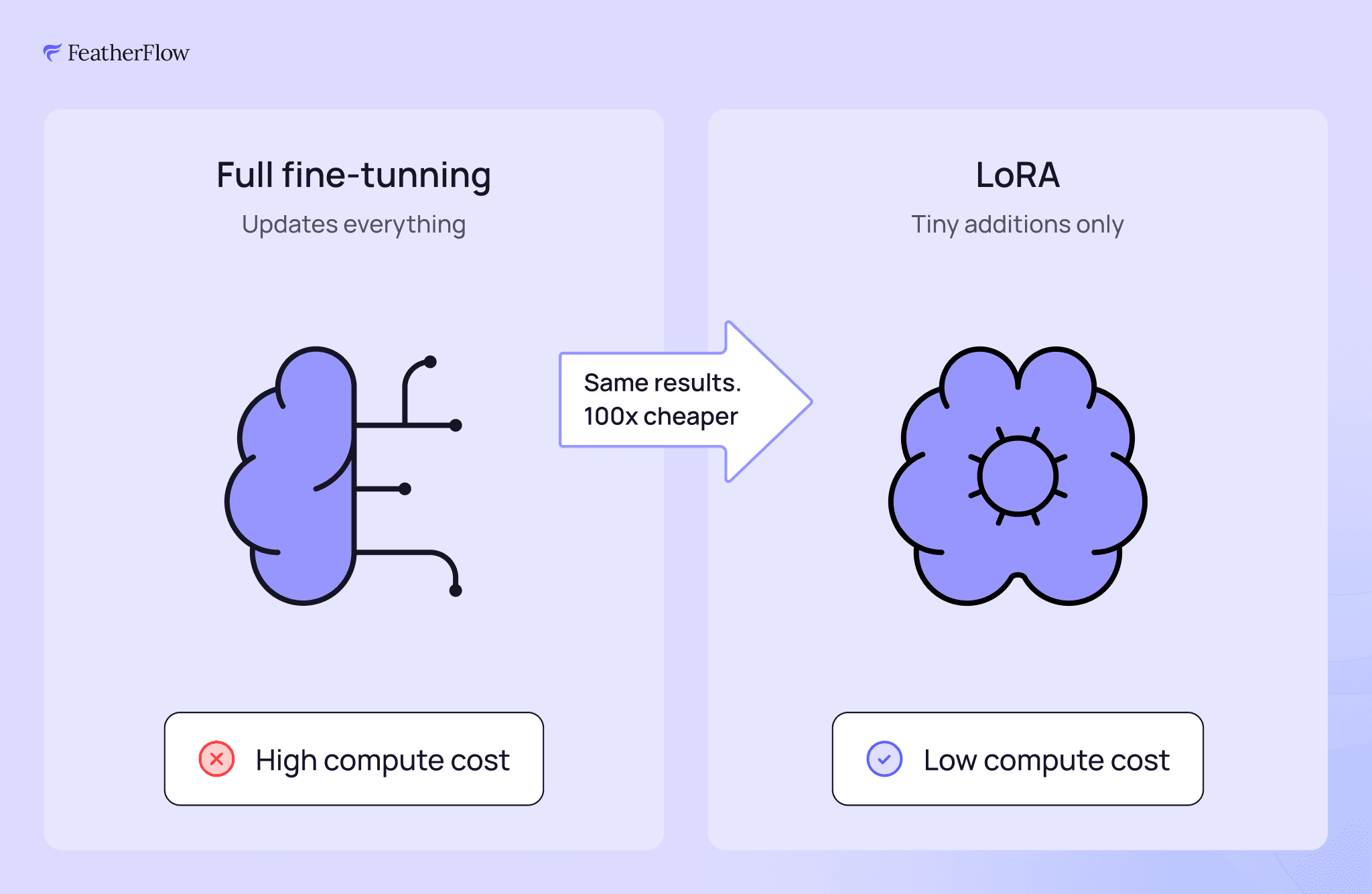
Fine-tuning is powerful but expensive. Updating billions of parameters requires multiple GPUs and serious infrastructure.
LoRA solves this by keeping the original model frozen and adding tiny trainable layers on top. These layers are a fraction of the size but capture most of the benefit.
Many fine-tuning tasks require relatively small, targeted parameter changes rather than a complete rewrite of the model.
By reducing the memory and compute needed for adaptation, LoRA made it more practical to fine-tune open models on modest hardware.
15. Quantization
Models keep getting bigger. Running them requires serious memory and compute.
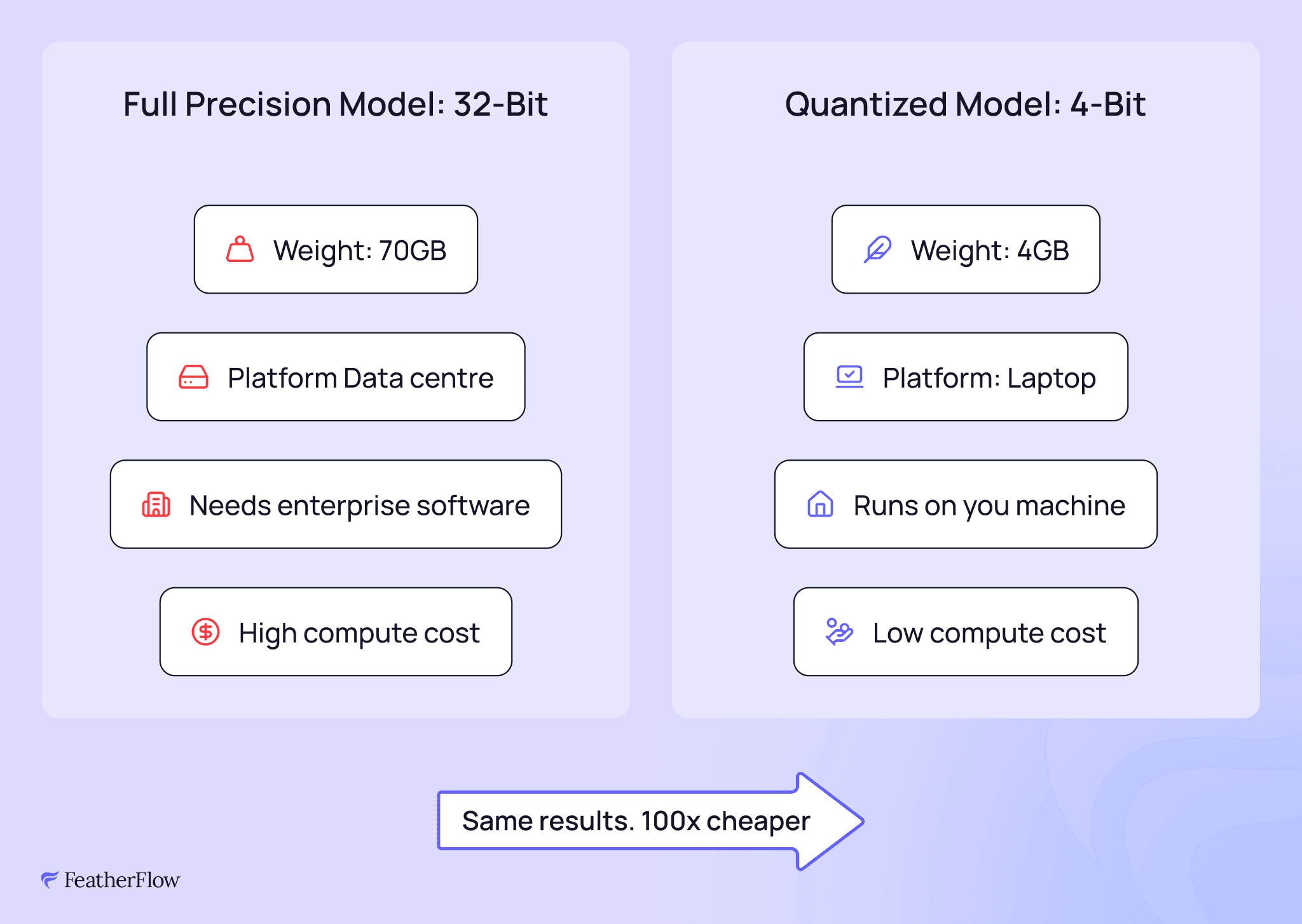
Quantization makes them smaller by reducing the precision of each weight. A weight stored at full precision uses 32 bits. Drop it to 4-bit and it’s 8x smaller, with surprisingly little quality loss.
Quantization is one reason large models can now run on laptops and consumer GPUs instead of only in data centers.
Part 4: How Real AI Systems Are Built
16. RAG (Retrieval-Augmented Generation)
RAG gives a language model relevant source material at answer time, reducing its reliance on stale or incomplete training data.
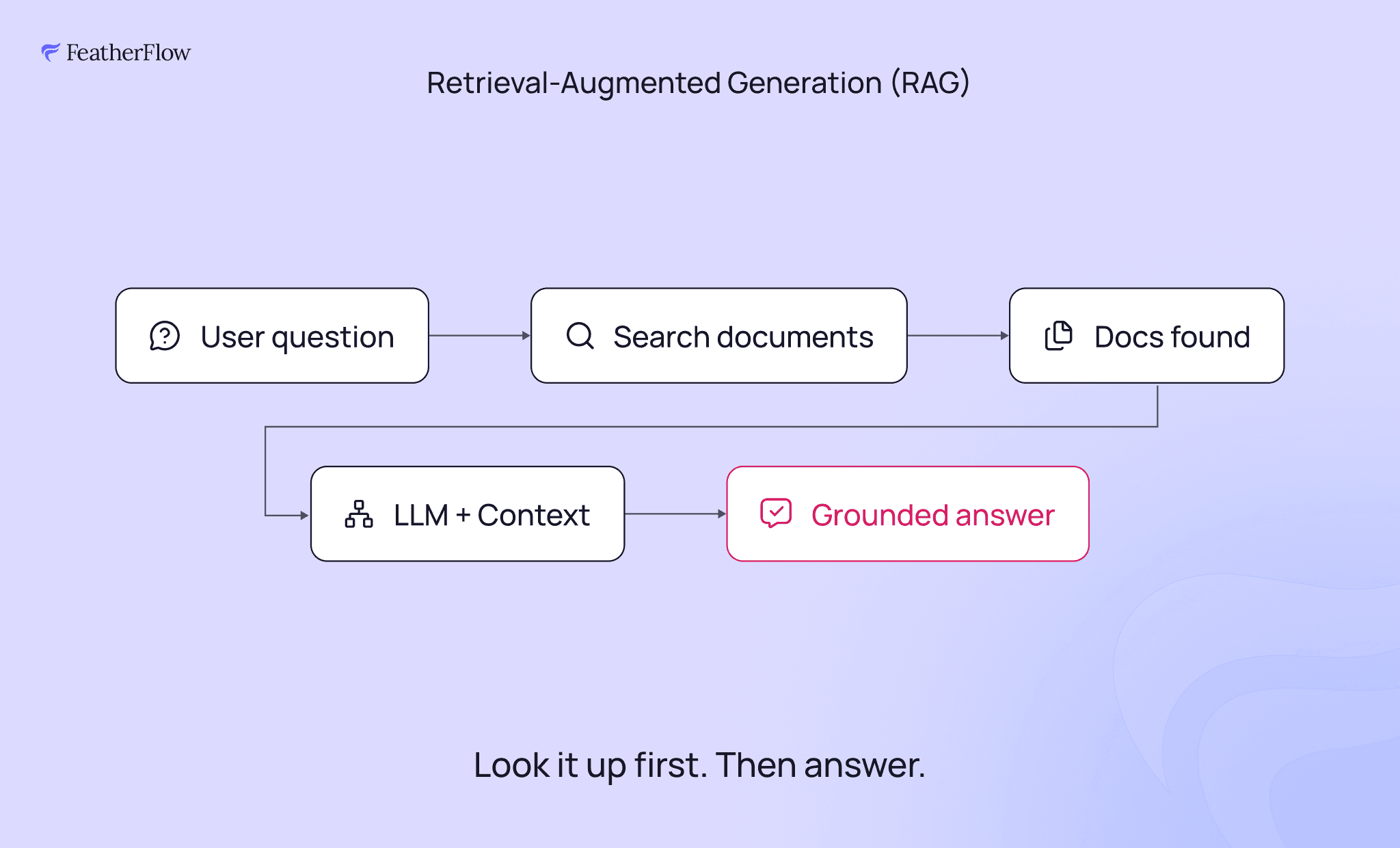
A typical RAG workflow follows four steps:
User asks a question
System searches a knowledge base for relevant documents
Those documents are passed to the model as context
Model answers using real information, not guesses
RAG resembles an open-book workflow: the system retrieves relevant sources before the model drafts an answer from them.
When source material changes, teams can update the knowledge base rather than retrain the model.
RAG is commonly used in customer-support bots, legal tools, internal knowledge bases, and medical-assistance systems.
17. Vector Databases
Vector databases make it possible to search millions of documents by meaning rather than only by exact keywords.
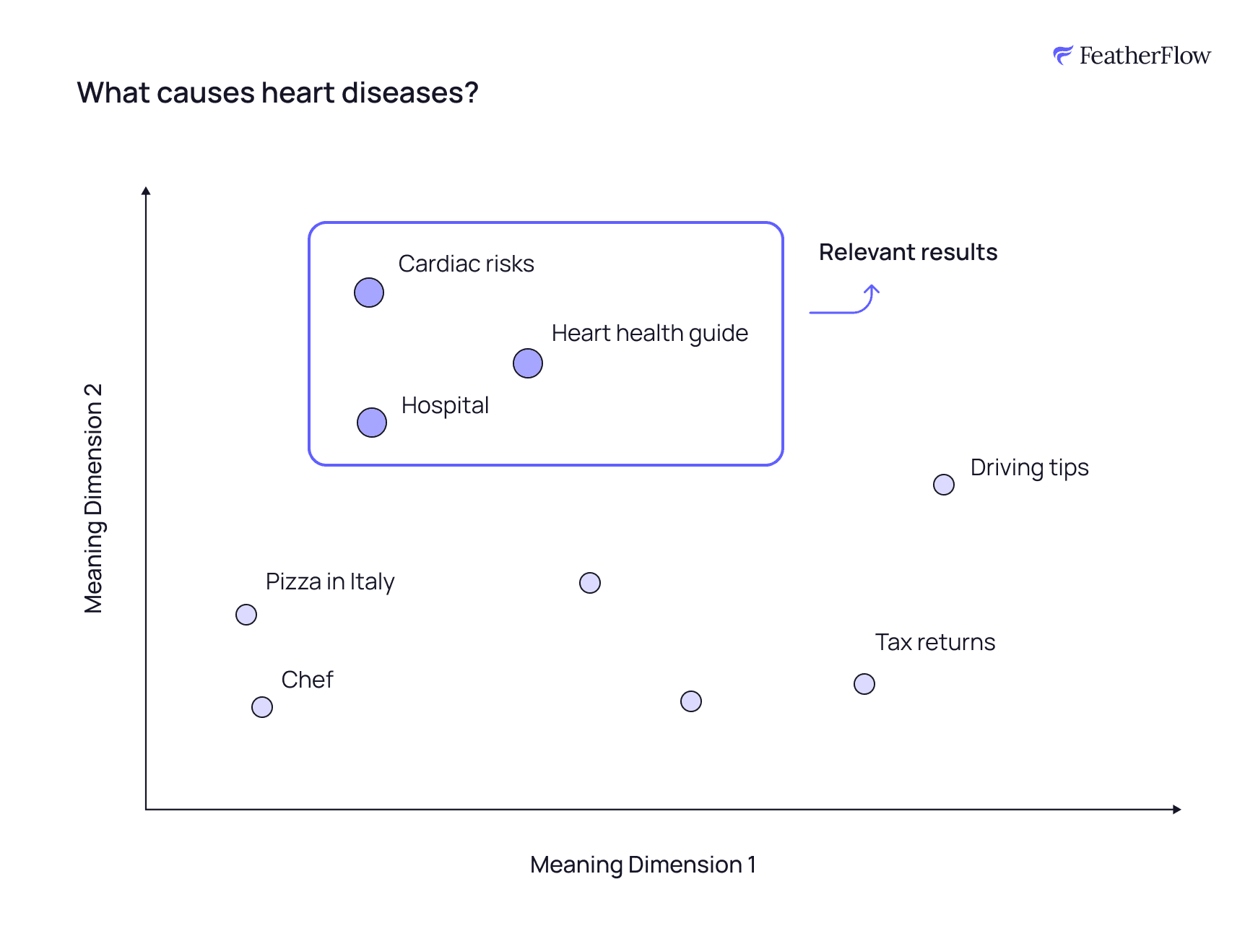
Every document gets converted into an embedding (a vector). Those vectors are stored. When a user asks a question, it also becomes a vector. The database finds the vectors closest to the question vector and returns the most semantically similar documents.
For example, a search for “heart disease treatment” can retrieve documents about “cardiac care protocols” even when the phrases do not exactly match.
Popular tools: Pinecone, Qdrant, Weaviate, pgvector.
18. AI Agents
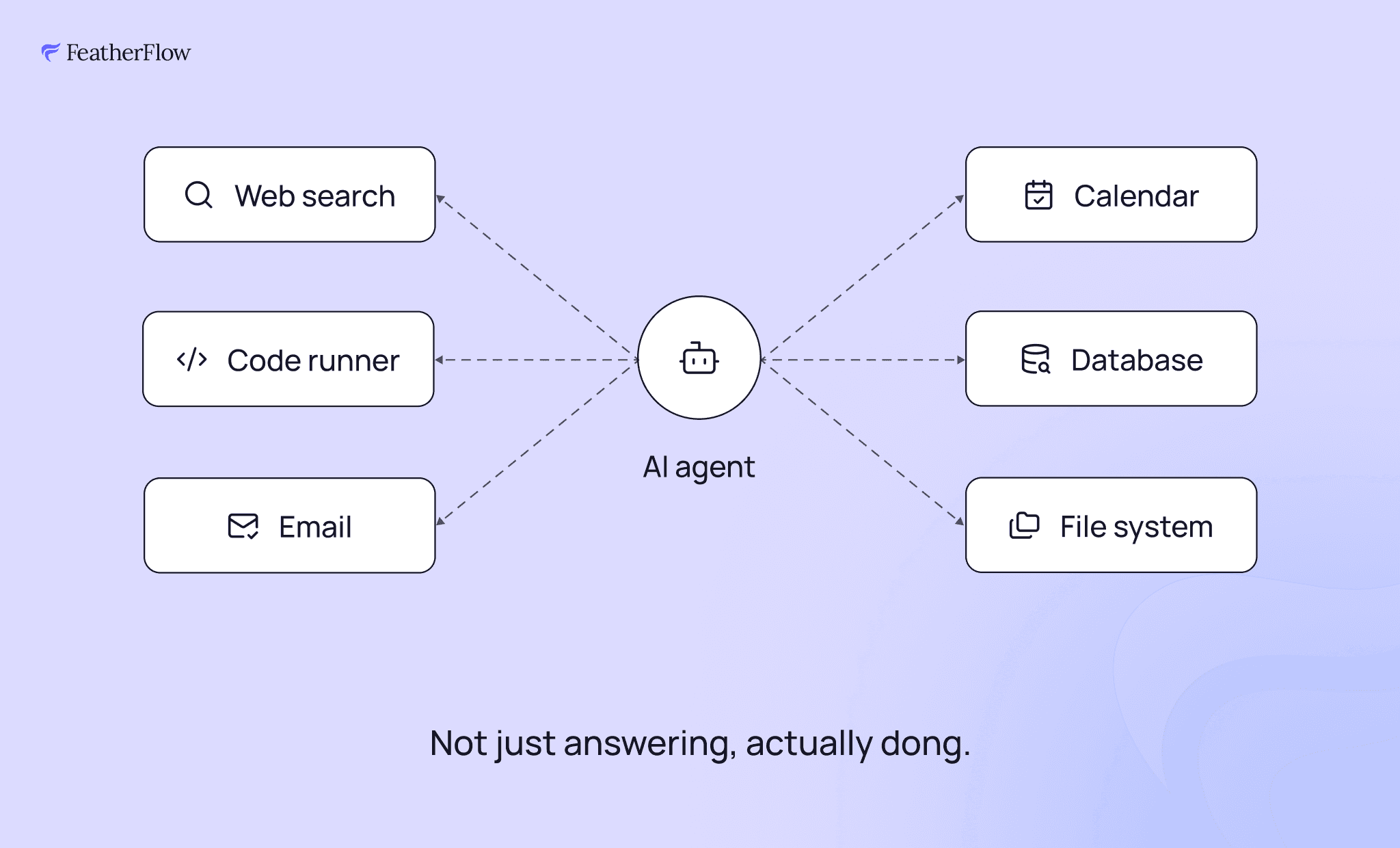
An AI agent combines an LLM with tools, a goal, and a loop for taking and checking actions.
While an LLM responds to a prompt, an agent can plan a sequence of actions, use tools, inspect the results, and continue until it reaches a stopping point.
A common agent loop is: think, act, observe, and repeat.
A coding agent fixing a bug might read the issue, explore the codebase, identify the problem, write a fix, run tests, and verify the result, all without you guiding each step.
Tools such as web search, code execution, APIs, and file systems allow an agent to act beyond the chat interface.
That combination supports tasks such as research, support workflows, and software maintenance.
19. Chain of Thought (CoT)
A model can fail on multi-step work when it commits to an early guess instead of working through the intermediate steps.
Chain-of-thought prompting asks the model to work through intermediate reasoning before giving an answer, which can improve performance on some math, logic, and planning tasks.
Instead of: “Solve: If a train travels 60mph for 2.5 hours, how far?”
Try: “Solve step by step: Speed = 60mph. Time = 2.5 hours. Distance = Speed × Time = ?”
Whether this improves reliability depends on the task and the model, but explicit intermediate steps can be useful for multi-step reasoning.
20. Diffusion Models
Diffusion models are widely used to generate images and increasingly support video, audio, 3D assets, and scientific design tasks.
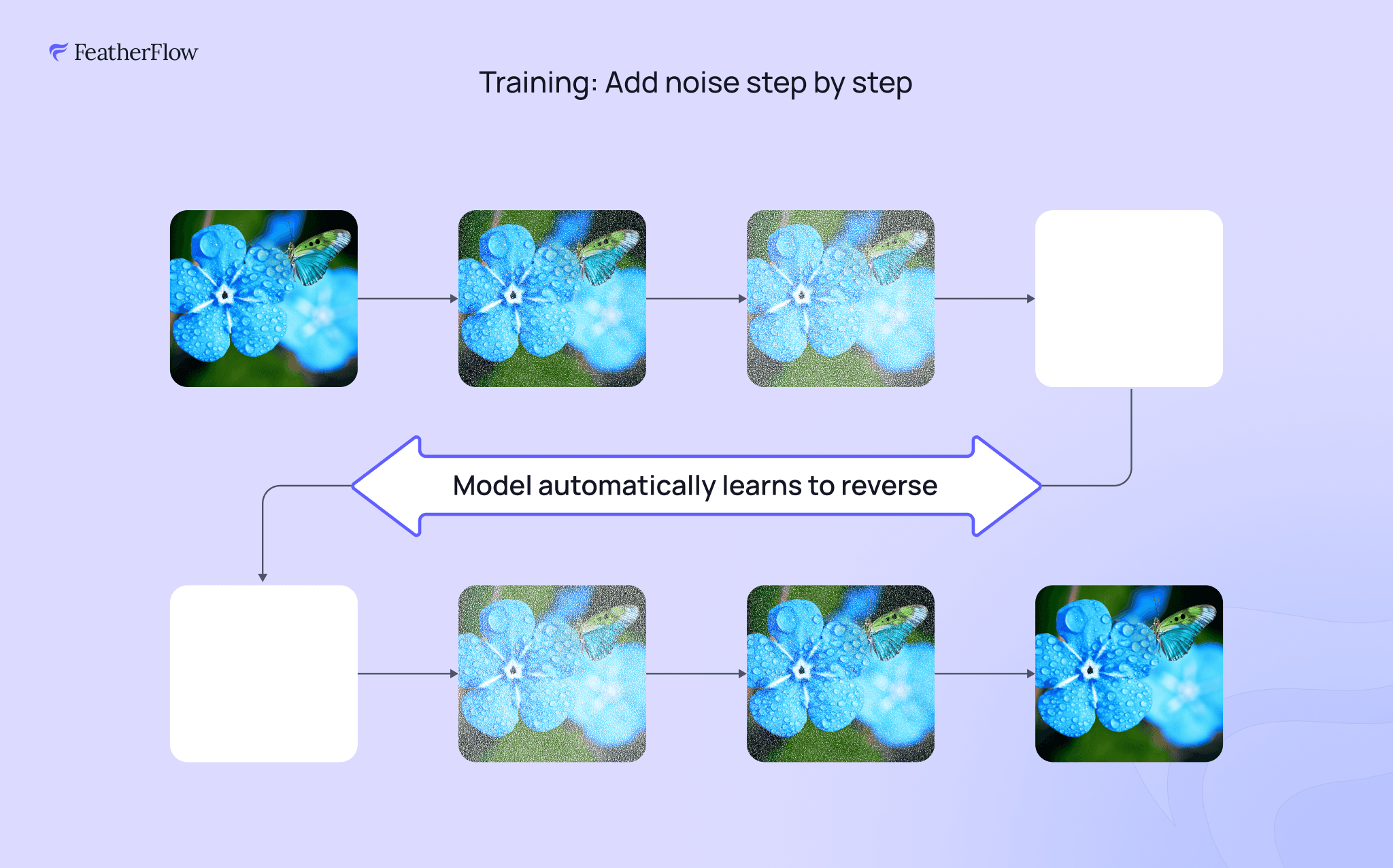
During training, the model learns to reverse a process that gradually adds noise to real images.
Training begins with a real image, adds noise until it resembles static, and teaches the model to predict how to reverse each step.
Generation begins with noise and removes it step by step under the guidance of a text prompt until an image emerges.
The name comes from physics—particles diffusing through a medium, like ink spreading in water. The model learns to run that process in reverse.
The Full Picture
Use this list as a reference when you encounter these terms:
How AI Works:
Neural Networks → Tokenization → Embeddings → Attention → Transformers
How LLMs Work:
LLMs → Context Window → Temperature → Hallucination → Prompt Engineering
How Models Improve:
Transfer Learning → Fine-Tuning → RLHF → LoRA → Quantization
How Real Systems Are Built:
RAG → Vector Databases → AI Agents → Chain of Thought → Diffusion Models
These concepts describe the main building blocks behind many current AI products.
Knowing the terms makes it easier to assess product claims, ask better questions, and identify where a system’s limits are likely to be.